'L'ÉTAT, C'EST MOI!' (THE STATE IS ME!)
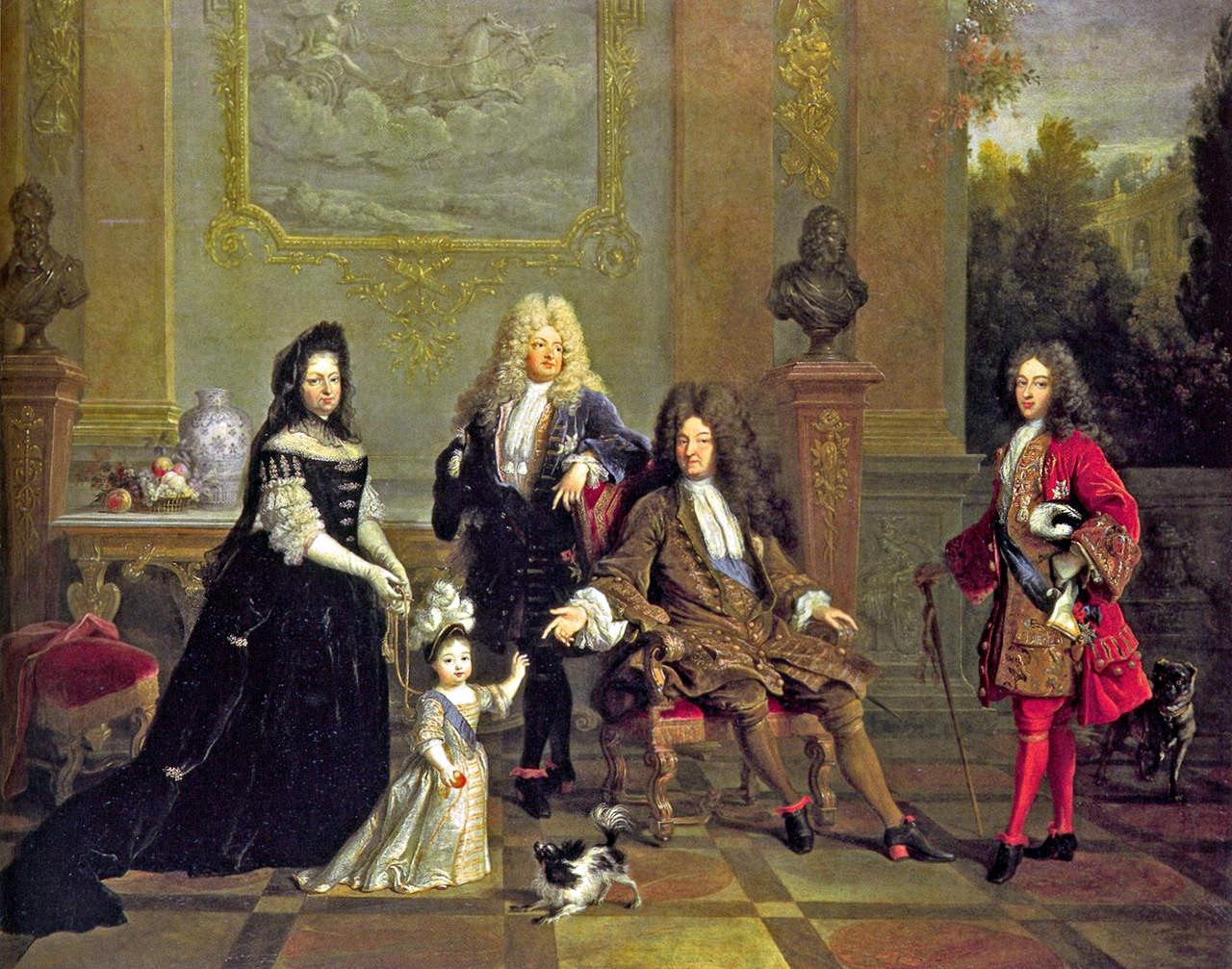
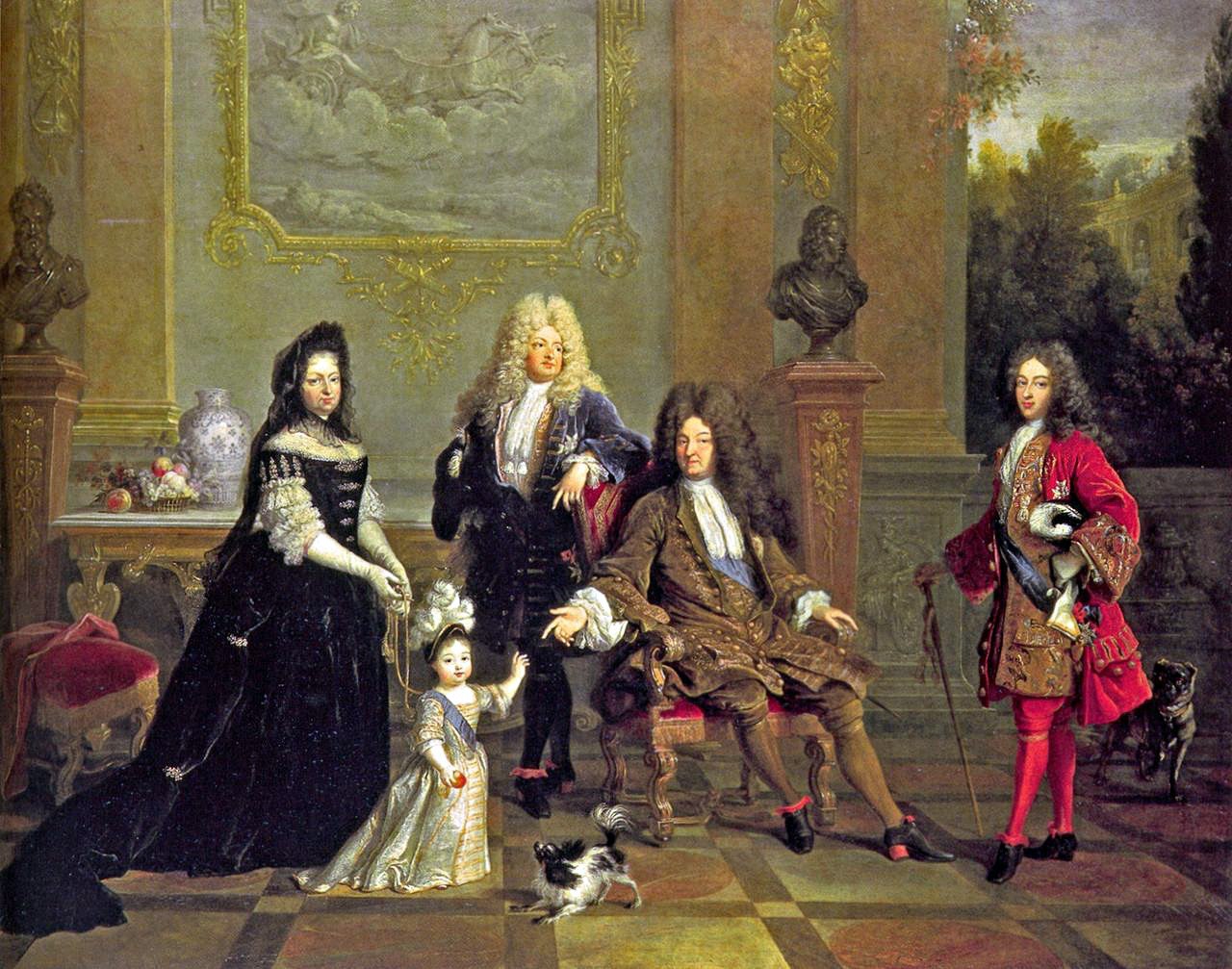
Nicolas de Largillière, the most famous painter of his time, was the author of landscapes, still lifes, historical canvases… everything was within his power! There are no limits to his inspiration and mastery, but! The main direction in his work, Largillière's calling card, is the portrait. More than four and a half thousand! portraits by the artist are studied even today, in our time, by art historians. And, as we understand, the creator achieved success in this genre, he was in demand. After all, before us is a portrait of Louis XIV himself with his family.
His father Louis XIII and grandfather Henry IV are present in the form of busts.
To the right of the King is his son – Louis the Grand Dauphin.
To the left – the eldest grandson Louis, Duke of Burgundy.
The King points, demonstrating his favor, to… a second's pause,
the first small palace intrigue… this is neither a little princess, nor a little baroness, this is the King's great-grandson – Louis, Duke of Brittany.
Many know, and some, perhaps, may be surprised – according to etiquette, for a long time boys in wealthy aristocratic European families were dressed in girls' clothing until the age of five. It was possible to distinguish a boy from a girl only by minor details: by the hair parting, by the headdress, by buttons arranged in a certain way…
But what about the King?
Louis XIV de Bourbon, also known as the "Sun King". A staunch supporter of absolute monarchy and the divine right of kings. "The State is Me!" – do you remember? Louis XIV ruled for 72! years – the absolute record of absolute monarchy.
The absolute record of absolute monarchy
During his reign, Louis carried out a whole series of successful reforms, thanks to which France flourished;
hundreds of art figures found a patron in the person of the head of state.
And, of course, fashion.
Louis is a famous trendsetter. What the King wears today – all of Europe wears tomorrow. Never before and never after the reign of the Sun King was men's costume so bright, magnificent, refined, and elegant. By the wave of the crowned trendsetter's hand, the entire male population of Europe began to wear a wig with long, curly locks falling onto the shoulders. It is called the "allonge" wig. It is still worn today by English judges and the Mayor of London.
And, finally, ladies, attention! – men's heels! Immediately, this idea was first picked up by the entire court, and subsequently by the townspeople. Over time, Louis realized that this fashion fight could only be won on a legislative level.
Thus appeared the royal decree that limited the height of heels:
1.25 cm (0.49 in) – for the commoner;
2.5 cm (0.98 in) – for the bourgeois;
3.75 cm (1.48 in) – for knights;
5 cm (1.97 in) – for nobles;
6.25 cm (2.46 in) – for members of the royal family.
Nicolas de Largillière "Louis XIV and His Family"
That's how it is! There is no accounting for taste (literally: For color and taste – not everyone is a comrade). But the main thing, probably, is that everything in those times strived for sophistication, refinement, and beauty – in life, in relationships, in fashion, and, of course, in music.
Excerpt from the Edict on Etiquette (17th Century):
                "Article VII. On Requirements for the Court:

                ...Requirement № 34: No member of the Court shall
                turn their back to His Majesty, regardless of
                circumstances, even upon departing, which is
                considered the highest mark of respect.

                Requirement № 35: Upon the King's appearance, all men
                are obliged to remove their headwear; this rule
                does not apply to Princes of the Blood..."
The absolute ruler of the musical life of the French capital
The composer and violin virtuoso Jean-Baptiste Lully made a brilliant career at the court of Louis XIV in his time. This career was marked by obtaining a patent for the right to found the Royal Academy of Music in Paris (with permission to pass it on by inheritance!). And, as a result, the position of absolute ruler of the musical life of the French capital.
By the way, the fashionable novelty that the court musician Jean-Baptiste Lully offered to the Sun King for performance at balls became one of the symbols of aristocratic dance tradition in Europe for many years. And this is the gavotte.